

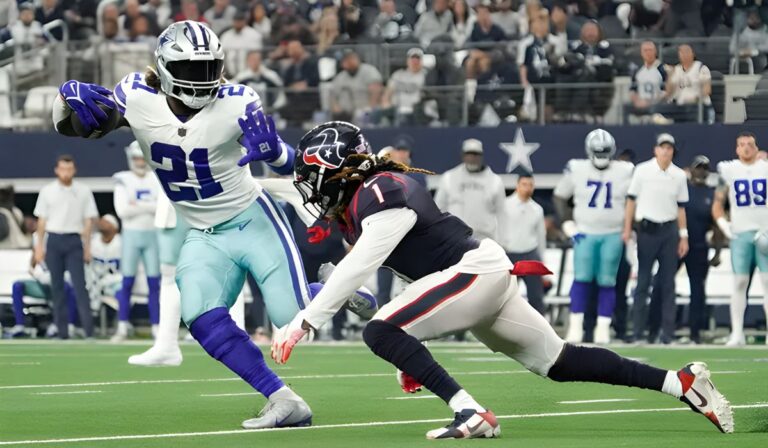
The Houston Texans vs Dallas Cowboys Match Player Stats tell a clear story about control, balance, and execution in one of the most watched Texas football matchups of the 2024 NFL season. Houston defeated Dallas 34-10 at AT&T Stadium, but the final score alone does not explain how the game unfolded. The Cowboys actually produced strong passing yardage, yet the Texans turned key moments into points, controlled the ground game, and used defensive pressure to break Dallas’ rhythm. For fans, fantasy football players, and searchers looking for a complete game breakdown, the player stats show why Houston looked sharper in the most important areas.
This matchup was not just about one team gaining more total yards than the other. It was about efficiency, red-zone success, turnovers, rushing strength, and defensive impact. Houston leaned on Joe Mixon’s physical running, C.J. Stroud’s steady passing, and a defense that made big plays when Dallas tried to respond. Dallas had production from Cooper Rush, CeeDee Lamb, and KaVontae Turpin, but the Cowboys could not turn enough drives into touchdowns. That gap between movement and scoring became the biggest difference in the game.
Match Overview: Texans Took Control Early
The Texans started fast and set the tone with a first-quarter rushing attack that put Dallas on its heels. Joe Mixon’s early touchdown runs gave Houston a strong lead, and that early cushion allowed the Texans to play with patience. Instead of chasing explosive plays on every snap, Houston stayed balanced and forced Dallas to prove it could finish drives. The Cowboys answered with a long touchdown pass from Cooper Rush to KaVontae Turpin, but that was their only touchdown of the night.
Dallas moved the ball at times, especially through the air, but the offense lacked consistency near scoring territory. The Cowboys finished with more first downs than Houston, yet Houston was much better at turning opportunities into points. That is why the Houston Texans vs Dallas Cowboys Match Player Stats are so useful: they show the difference between gaining yards and controlling a football game. Houston’s numbers were not just impressive; they were timely.
Final Score and Team Performance
Houston won 34-10 after scoring 14 points in the first quarter, adding field goals in the second and third quarters, and closing the game with another 14-point fourth quarter. Dallas scored all 10 of its points in the second quarter and was shut out in the second half. That second-half gap reflected Houston’s ability to adjust, pressure the quarterback, and protect its lead without becoming careless.
From a team-stat view, the game was closer in total yardage than the scoreboard suggested. Houston finished with 391 total yards, while Dallas had 388. The major difference came in rushing yards and turnovers. Houston rushed for 141 yards, while Dallas managed only 64. Houston also handled the ball better and created defensive momentum at the right time. The Texans did not need a perfect offensive game because their rushing attack and defense carried the most important moments.
C.J. Stroud’s Passing Stats and Game Management
C.J. Stroud completed 23 of 34 passes for 257 yards with no touchdowns and one interception. Those numbers may not look flashy, but they reflect a quarterback who kept the offense moving and did not force the game once Houston had the lead. Stroud spread the ball to several receivers and used short-to-intermediate throws to keep the chains moving. His passing performance was not about highlight throws as much as it was about structure and control.
Stroud also added value with his legs, rushing three times for 26 yards. Those yards helped Houston stay ahead of schedule and made Dallas account for another layer of the offense. His interception was a mistake, but it did not define the game because the Texans were strong enough in other areas to recover quickly. In this full breakdown, Stroud’s player stats show a young quarterback managing a road rivalry game with maturity.
Joe Mixon Dominated the Ground Game
Joe Mixon was the biggest offensive star of the matchup. He rushed 20 times for 109 yards and three touchdowns, including a long run of 45 yards. His physical style gave Houston a clear identity and forced Dallas to defend the line of scrimmage all night. Every time the Texans needed stability, Mixon gave them a direct answer with hard runs and smart vision.
Mixon also contributed as a receiver, catching two passes for 44 yards. That made his total offensive impact even stronger because Dallas had to respect him on checkdowns and designed outlet plays. His three rushing touchdowns were the headline, but his overall role was bigger than the scoring column. Mixon helped Houston control tempo, finish drives, and protect the defense by keeping the offense on the field.
Texans Receiving Stats: Balanced and Efficient
Houston did not rely on just one receiver. Nico Collins and Tank Dell each caught four passes for 54 yards, giving Stroud two dependable options in the passing game. Collins provided strong route running and reliable catches, while Dell added quickness and separation. Neither receiver scored a touchdown, but both helped Houston create spacing and maintain offensive rhythm.
Dalton Schultz also played an important role, catching five passes for 33 yards. John Metchie III added three catches for 33 yards, and Cade Stover contributed two receptions for 15 yards. This balanced receiving production made Houston difficult to defend because Dallas could not simply double one target and shut down the passing game. The Texans’ passing stats show a complete offensive approach built around distribution, patience, and situational football.
Cooper Rush’s Passing Numbers Tell Two Stories
Cooper Rush finished with 32 completions on 55 attempts for 354 yards, one touchdown, and one interception. On paper, that is a high passing yardage total, but the deeper story is less positive for Dallas. Many of those yards came while the Cowboys were trailing and trying to climb back into the game. Rush made several accurate throws, but Dallas struggled to turn passing volume into scoreboard pressure.
His best moment was the 64-yard touchdown pass to KaVontae Turpin, which gave Dallas life in the second quarter. However, Houston’s defense forced Rush into difficult situations throughout the game. The Cowboys had to throw often because the run game was not producing enough. That made the offense predictable, and Houston’s pass rush took advantage late in the game.
CeeDee Lamb and KaVontae Turpin Led Dallas Receivers
CeeDee Lamb was Dallas’ top receiving option, catching eight passes for 93 yards on 12 targets. He was productive and remained the most trusted weapon in the Cowboys’ offense. Lamb also added one rushing attempt for 13 yards, showing how Dallas tried to get the ball in his hands in different ways. Even without a touchdown, his player stats prove he was central to the Cowboys’ game plan.
KaVontae Turpin delivered Dallas’ most explosive play with three catches for 86 yards and one touchdown. His 64-yard score was the Cowboys’ biggest offensive highlight and briefly shifted momentum. Luke Schoonmaker also had a useful game with six catches for 56 yards, while Brevyn Spann-Ford added four receptions for 42 yards. Dallas had receiving production, but the lack of red-zone success kept those numbers from changing the outcome.
Cowboys Rushing Struggles Hurt the Offense
Dallas’ rushing stats were one of the clearest weaknesses in the game. Rico Dowdle led the Cowboys with 10 carries for 28 yards, while Deuce Vaughn had 13 yards on four carries, Ezekiel Elliott had eight yards on one carry, and Cooper Rush added two rushing yards. CeeDee Lamb’s 13-yard rush helped the total, but the Cowboys never built a steady ground attack.
That lack of rushing balance put too much pressure on Rush and the passing game. When an offense becomes pass-heavy because it has no consistent run threat, the defense can attack more aggressively. Houston’s defensive front did not have to respect play-action as much in the second half, and that allowed the Texans to create pressure, force mistakes, and keep Dallas away from the end zone.
Defensive Player Stats and Game-Changing Plays
Houston’s defense made the biggest statement when the game needed separation. Danielle Hunter recorded two sacks, while Denico Autry and Tim Settle also contributed sacks. Derek Stingley Jr. added an interception, and Houston’s defensive backs competed well against a high-volume passing attack. The Texans gave up passing yards, but they made Dallas work hard for them and limited the damage where it mattered most.
The most important defensive moment came from Derek Barnett, who was involved in a fumble sequence that resulted in a touchdown. That play turned the game from a controlled Houston lead into a clear Texans takeover. Dallas had chances to stay within reach, but turnovers and failed fourth-down attempts kept stopping momentum. In match player stats analysis, defensive touchdowns and sacks often matter more than raw yardage totals, and this game proved that point.
Special Teams and Kicking Impact
Ka’imi Fairbairn was perfect for Houston, making two field goals and all four extra points. His reliability helped the Texans keep adding points even when drives did not end in touchdowns. Tommy Townsend also helped with field position, averaging 52.5 yards per punt and placing multiple punts inside the 20. Those hidden-yardage plays made Dallas’ offensive job harder.
For Dallas, Brandon Aubrey made a 53-yard field goal and an extra point, but the Cowboys missed a scoring chance on another field goal attempt. Special teams did not decide the entire game, but it supported the bigger pattern: Houston finished more cleanly, while Dallas left too many chances unfinished. In a matchup with similar total yards, those details become even more important.
What the Player Stats Reveal About the Game
The player stats reveal that Houston won because it played the more complete game. The Texans had the better rushing attack, stronger red-zone presence, more reliable defensive finish, and cleaner late-game execution. Joe Mixon gave Houston a dependable offensive engine, while Stroud avoided the kind of mistakes that could have opened the door for Dallas. Houston did not need to dominate every stat category because it dominated the decisive ones.
Dallas, meanwhile, had passing volume without enough payoff. Rush threw for 354 yards, Lamb nearly reached 100 receiving yards, and Turpin produced a long touchdown, but the Cowboys could not turn those numbers into a balanced scoring attack. Their rushing struggles, turnovers, and failure to finish drives made the difference. That is why the Houston Texans vs Dallas Cowboys Match Player Stats are more than numbers; they explain the full shape of the game.
Final Thoughts
The Houston Texans vs Dallas Cowboys Match Player Stats show a 34-10 Texans win built on physical running, timely defense, and smarter situational football. Joe Mixon was the standout performer with 109 rushing yards and three touchdowns, while C.J. Stroud kept the Houston offense organized and efficient. The Texans’ defense added pressure, created turnovers, and delivered the type of game-changing play that turns a close contest into a comfortable win.
For Dallas, Cooper Rush, CeeDee Lamb, and KaVontae Turpin produced notable individual stats, but the team could not build enough balance around them. The Cowboys moved the ball but did not finish drives, and that made their yardage less meaningful. In the end, Houston played the cleaner, tougher, and more complete game, making this matchup a strong example of how player stats can reveal the real reasons behind a final score.
Frequently Asked Questions (FAQs)
Who was the best player in the Houston Texans vs Dallas Cowboys game?
Joe Mixon was the best player in the game because he rushed for 109 yards and scored three touchdowns. His running gave Houston control, helped finish drives, and forced Dallas to defend the Texans’ offense honestly.
What were C.J. Stroud’s stats against the Cowboys?
C.J. Stroud completed 23 of 34 passes for 257 yards with no touchdowns and one interception. He also added 26 rushing yards, which helped Houston extend plays and keep the offense balanced.
How did Cooper Rush perform for the Dallas Cowboys?
Cooper Rush threw for 354 yards, one touchdown, and one interception. His yardage total was strong, but Dallas struggled to finish drives, so the passing production did not lead to enough points.
Which Dallas Cowboys receiver had the best game?
CeeDee Lamb led Dallas with eight catches for 93 yards, while KaVontae Turpin made the biggest play with a 64-yard touchdown catch. Lamb was the most consistent receiver, but Turpin delivered the top highlight.
Why did the Texans beat the Cowboys so clearly?
Houston won because it controlled the ground game, finished drives, protected the lead, and made key defensive plays. Dallas had passing yards, but turnovers, rushing struggles, and poor finishing kept the Cowboys from turning production into points.
Read Also :- Dallas Cowboys vs Philadelphia Eagles Player Stats: Full Game Breakdown
