

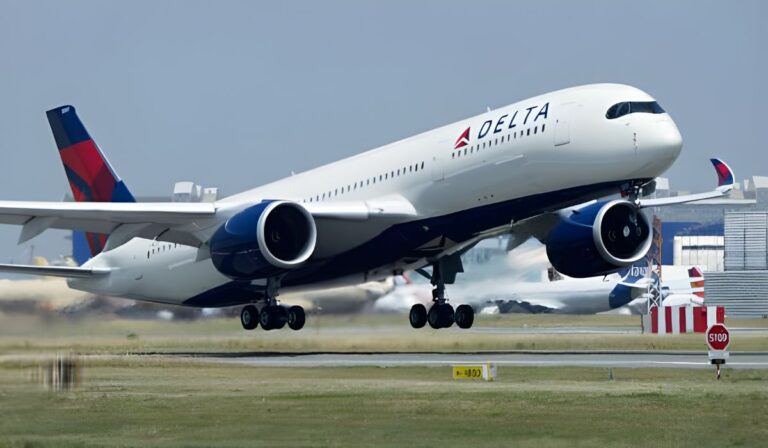
Delta Flight DL275 Diverted LAX became a major aviation search topic because it involved a long-haul route, a sudden destination change, and a safe landing at LAX. The flight was operating from Detroit Metropolitan Wayne County Airport to Tokyo Haneda when the crew chose to divert to Los Angeles International Airport. For passengers, any diversion can feel tense, especially when it happens during a trans-Pacific journey. But this case is best understood as a safety-first decision made before a technical concern could reduce the flight’s safety margin.
The reported issue involved the aircraft’s engine anti-ice system, an important feature that helps protect engine components from ice buildup in cold, moisture-heavy conditions. DL275 was operated by an Airbus A350-900, a modern widebody jet built for long international routes. The aircraft landed safely at LAX, and the remaining Tokyo portion of the trip was canceled while travelers were rebooked. The incident shows how pilots, dispatchers, maintenance teams, and airport staff respond when a flight cannot continue as planned.
What Happened to Delta Flight DL275?
Delta Flight DL275 was scheduled as a Detroit-to-Tokyo Haneda service, a demanding route that crosses northern airspace before continuing across the Pacific. During cruise, the crew became aware of a technical concern connected to the engine anti-ice system. Instead of continuing toward Japan, the pilots changed course and headed for Los Angeles. That decision placed the aircraft at a large Delta-supported airport with strong maintenance resources, widebody handling, and international passenger support.
Reports placed the aircraft at flight level 380, or about 38,000 feet, when the diversion decision was made. It was also hundreds of nautical miles southwest of Anchorage. That helps explain why it did not simply land at the nearest airport. Diversions are not based only on distance. Crews also consider weather, runway length, fuel, aircraft support, passenger handling, and maintenance capability. In this case, LAX offered a safer and more practical solution for a stable long-haul aircraft with a technical issue.
Full Timeline of the DL275 Diversion
The timeline began with DL275 leaving Detroit for Tokyo Haneda as part of Delta’s trans-Pacific network. The flight climbed and entered the long cruise portion of the trip. While crossing northern airspace, the crew identified or received indications of an anti-ice system problem. After assessing the issue, the crew and operations team chose not to continue farther over the Pacific, where alternate airports become more limited.
The aircraft then turned toward Los Angeles and continued for several hours before landing safely at LAX. Reports say it touched down on runway 06R. Once on the ground, Delta canceled the rest of the flight to Tokyo and began rebooking passengers. The aircraft remained in Los Angeles for maintenance attention before returning to service later. In simple terms, the timeline shows a controlled diversion: issue found, route changed, safe landing completed, and passengers rebooked.
Reported Cause: Engine Anti-Ice System Issue
The reported cause behind the Delta Flight DL275 Diverted LAX incident was a problem with the Rolls-Royce Trent XWB engine anti-ice system. The Airbus A350 uses Trent XWB engines, which are designed for efficient long-range flying. Engine anti-ice systems help protect engine inlets and related areas when an aircraft passes through cold air and visible moisture. On a long oceanic route, pilots must think ahead because weather and temperature conditions can change over many hours.
An anti-ice issue does not mean the engine failed. Available reports point to a precautionary diversion, not a crash or uncontrolled emergency. The aircraft remained flyable and landed safely. The concern was risk management. Continuing across the Pacific with a compromised ice-protection system could reduce options if icing conditions appeared later. By diverting to LAX, the crew kept the aircraft within a safer operating plan and gave maintenance teams the chance to inspect the system properly.
Why LAX Was Chosen
Many readers wonder why the flight diverted to Los Angeles instead of a closer airport near Alaska. The answer likely comes down to overall safety and airline operations. A large international aircraft needs more than a runway. It needs the right ground equipment, trained maintenance teams, passenger services, customs support, crew planning, and rebooking options. Los Angeles International Airport provides all of those advantages.
A closer airport might have been available, but that does not automatically make it the best choice. If the aircraft is stable and has enough fuel, a larger hub can be safer and more useful than a smaller field with limited support. LAX gave Delta more flexibility for maintenance, passenger care, and onward travel. For travelers, the diversion was still frustrating, but the decision appears to have focused on the safest complete outcome rather than the shortest route.
Passenger Safety and Cabin Experience
For passengers onboard, the sudden route change was likely stressful. A flight to Tokyo became a long diversion to Los Angeles, affecting connections, hotel plans, business meetings, and family schedules. Still, the most important fact is that the plane landed safely and there were no widely reported injuries tied to the diversion. In aviation, a safe landing is the main measure of success when a flight does not go as planned.
Cabin crews play a major role during diversions. They help keep passengers calm, share information when available, prepare the cabin, and assist travelers who may be anxious. Clear communication matters because passengers want to know whether the aircraft is safe and what will happen after landing. In this case, the reported anti-ice explanation helped show that the diversion was a preventive safety step rather than a last-minute emergency.
What an Anti-Ice System Does
An aircraft anti-ice system helps prevent ice from forming on areas where buildup could affect safe performance. Engine anti-ice systems focus on protecting engine inlets and related components. At cruising altitude, temperatures are extremely cold, and aircraft may pass through moisture that can freeze. Even modern jets need these systems ready when conditions require them.
The issue becomes more important on a trans-Pacific route because the aircraft may spend hours over remote areas with fewer quick landing options. Pilots are trained to protect safety margins early. If a required system is not working as expected, they review checklists, coordinate with dispatch, and choose a plan that keeps the flight within safe limits. That is why a technical issue passengers cannot see can still lead to a diversion.
How Pilots Decide to Divert
A diversion decision is rarely made casually. Pilots review the technical issue, aircraft status, fuel, weather, route options, and available airports. Airline dispatchers can provide updated weather, airport data, and operational support. Maintenance teams may also help evaluate the situation from the ground. The captain remains responsible for the safety of the flight, but the decision is supported by a wider safety network.
The word “diverted” can sound dramatic, but it often means the aviation system is working as designed. Pilots are trained to avoid unnecessary risk, especially over oceans or remote regions. If continuing to the planned destination would reduce safety margins, landing at a suitable alternate airport is the smarter choice. Delta Flight DL275 had enough control and planning time to reach LAX safely, which is very different from an uncontrolled emergency.
What Happened After Landing at LAX?
After landing at Los Angeles International Airport, Delta had to manage both the aircraft and the passengers. The aircraft needed maintenance inspection because the reported issue involved a system important to long-haul safety. A widebody jet cannot simply continue across the Pacific if a key technical concern remains unresolved. Maintenance teams must inspect, troubleshoot, repair if needed, and clear the aircraft before it returns to normal operations.
Passengers also needed help with new travel plans. When an international flight is canceled after a diversion, airline teams usually work on rebooking, hotel support if needed, meal arrangements, baggage handling, and updated itineraries. That part matters because diversions affect real people, not just flight maps. Still, the inconvenience must be weighed against the reason for the decision: safety. A delay is difficult, but it is better than continuing with reduced technical confidence.
Why This Incident Attracted Attention
The Delta Flight DL275 Diverted LAX story gained attention because it involved Delta Air Lines, an Airbus A350, a trans-Pacific route, a technical issue, and an unexpected landing at LAX. Aviation enthusiasts also noticed the unusual routing because the aircraft turned away from its planned path and flew for hours before reaching Southern California. Flight-tracking communities often follow these situations closely.
Everyday travelers had simple questions: Was the flight safe? Why did it go to Los Angeles? What caused the diversion? Would passengers still reach Japan? These questions are understandable. The answers show why context matters. A diversion is not the same as a crash or near-disaster. It is often a careful response to a condition that needs attention before it becomes more serious.
Safety Lessons From Delta Flight DL275 Diverted LAX
The biggest lesson is that modern aviation depends on conservative decision-making. Pilots do not need to wait until a situation becomes dangerous before they act. If a system concern could affect later portions of a flight, especially over remote oceanic airspace, they can choose a safer airport and remove uncertainty. This layered approach is one reason commercial air travel remains highly safe.
The incident also shows the value of strong airline networks. LAX was not only a runway; it was a place where Delta could access maintenance, passenger support, crew resources, and operational flexibility. A safe diversion is not finished when the wheels touch down. The airline still has to care for passengers, inspect the aircraft, manage crews, and rebuild travel plans. In this case, the safe landing showed the system doing what it is designed to do.
Final Thoughts
Delta Flight DL275 Diverted LAX is best understood as a safety-driven diversion involving a Detroit-to-Tokyo long-haul flight and a reported engine anti-ice system issue. The aircraft landed safely at Los Angeles International Airport, passengers were rebooked, and the plane later returned to service after ground attention. While the event caused disruption, it also showed the aviation industry’s cautious approach to technical concerns.
For travelers, the takeaway is simple: a diversion can be inconvenient without meaning the aircraft was in immediate danger. The crew made a conservative decision that protected safety margins and allowed the issue to be handled at a major airport. The headline may sound dramatic, but the deeper message is reassuring. The aircraft landed safely, the issue was handled on the ground, and passenger safety remained the priority.
Frequently Asked Questions (FAQs)
Why was Delta Flight DL275 diverted to LAX?
Delta Flight DL275 was reportedly diverted because of an engine anti-ice system issue on the Airbus A350-900. This system helps protect engine areas from ice buildup in certain cold and moist flight conditions.
Was Delta Flight DL275 in immediate danger?
Available reports suggest the aircraft landed safely and the diversion was precautionary. The crew chose LAX to maintain strong safety margins instead of continuing farther across the Pacific.
Where was Delta Flight DL275 originally going?
Delta Flight DL275 was operating from Detroit Metropolitan Wayne County Airport to Tokyo Haneda Airport. The planned trip changed when the crew diverted to Los Angeles International Airport.
Why did the flight go to Los Angeles instead of Alaska?
LAX likely offered stronger maintenance support, widebody handling, passenger services, and rebooking options. A closer airport is not always the best diversion airport when the aircraft is stable.
What happened to passengers after the diversion?
After landing at LAX, the remaining flight to Tokyo was canceled and passengers were rebooked. This allowed the airline to inspect the aircraft properly before returning it to service.
Read Also :- What Is SnowMTL? Complete Guide to AI Manga Translation Online
